
Broth NotesNOTE 05 · 05 IN THE SERIES
BROTH NOTES
From Clear to Full-Bodied: How Broth Changes at the Table
Broth is not a still backdrop. Every round of ingredients and every interval of waiting can make the next sip different from the last.
Reading settings+
Use larger text or higher contrast whenever reading would feel more comfortable.
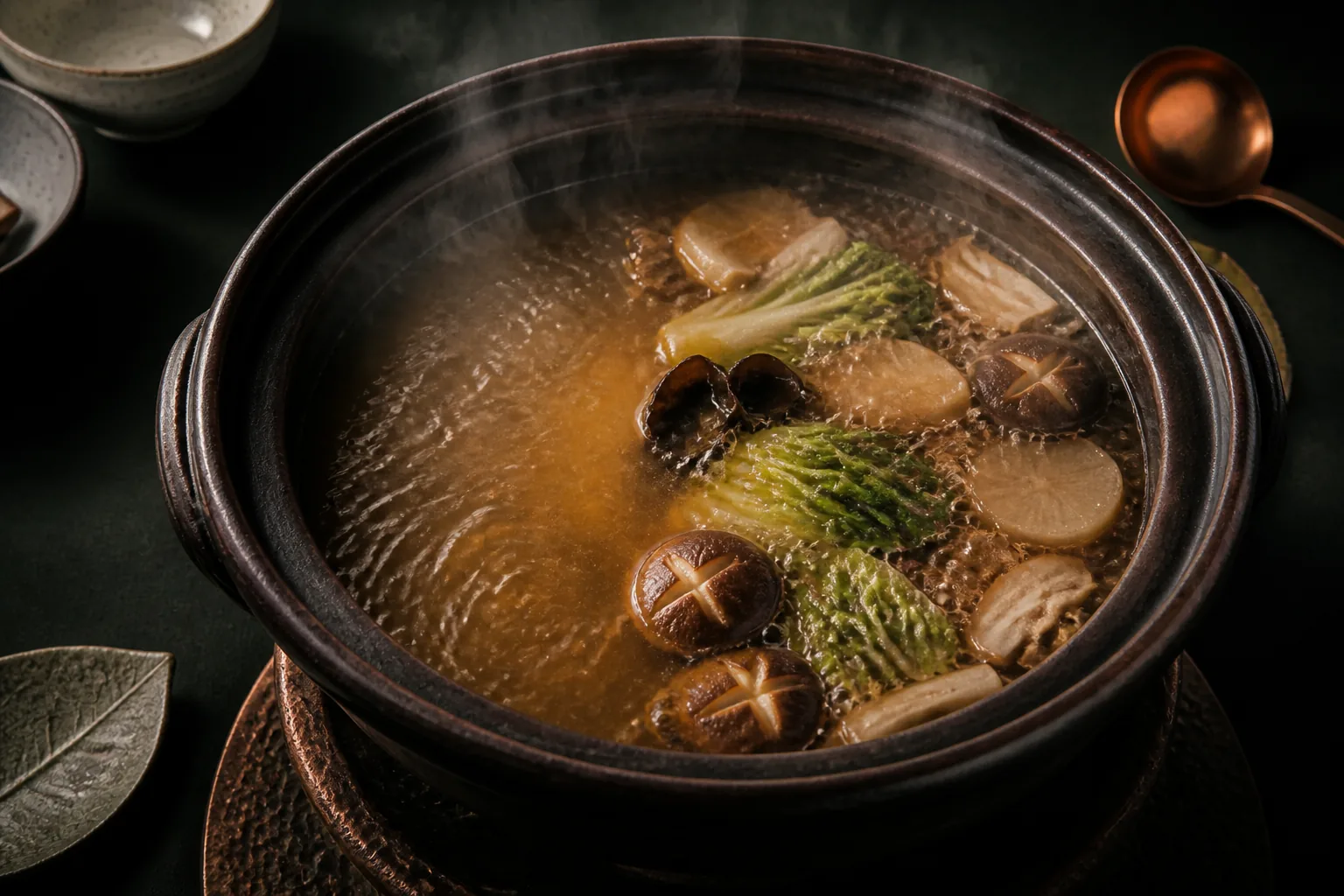
Across a hotpot meal, no two spoonfuls of broth are exactly the same. At the beginning, it keeps the clearest outline of where it started. As ingredients enter, water, aroma and fine particles gradually join the liquid, moving it from a defined opening toward a fuller middle. Before calling the change simply weaker or stronger, look at four separate lines: aroma, weight on the palate, the perception of saltiness, and the finish after swallowing. They may not move together. That is exactly why each round is worth another sip.
Notice What Changes on the Palate
Give the change three markers. Before any ingredients enter, serve two or three small sips and remember the broth’s color, aroma and feel on the tongue. Taste again after vegetables, mushrooms or other ingredients have cooked. Has a clean sweetness appeared, an earthy aroma, or a softer texture? Save the third marker for just before a final staple. Personal words such as brighter, rounder or slightly more coating are enough to build a memory of the meal. Even if the three moments feel similar, notice which one is easiest to sip and makes you want to stay with it a few seconds longer.
Let the Finish Stay for a Moment
Different ingredients leave different traces. A water-rich vegetable may make a sip feel lighter. A porous ingredient carries broth away from the pot, while cut surfaces or starch may change its appearance and texture. Amount, cut, heating time and the state of the entire pot shape the answer together. Adding less at a time and observing after each round makes it easier to understand where a change came from than pouring everything in together.
Bring the Ingredients In
Replenishing the broth creates another clear turn. Check first that nothing has been forgotten in the pot, ask the team at the restaurant to help, and allow the pot to settle again before taking another sip. By the end, the broth carries traces from the entire table. Some people like to add noodles or rice at this point; others save a small bowl and finish it slowly. The ending waits in the flavor where you most want the meal to rest.
Carry the Observation to Another Meal
At your next hotpot meal, save one sip for the opening, one for the middle and one for the end. Ask only: what came forward, what moved into the background, and which moment did I enjoy most? Invite the people beside you to choose a favorite moment too, and hear how one broth followed several different paths. Placed side by side, the three tastes give the meal an opening, a turn and an ending. You need not remember every detail to recognize the sip you most want to revisit. Carry the answer to your next gathering, and you will gradually learn to read the pot that feels most like your own.
Keep this note as a small idea for your next hotpot. For current dishes, ingredients and in-store practice, please ask the team at your location.