
Broth NotesNOTE 01 · 05 IN THE SERIES
BROTH NOTES
Before the Broth Reaches Your Lips, Its Aroma Takes a Seat Beside You
A sensory note for the few seconds before hot broth is tasted: watch the steam, notice the aroma, and leave a little room for your palate.
Reading settings+
Use larger text or higher contrast whenever reading would feel more comfortable.
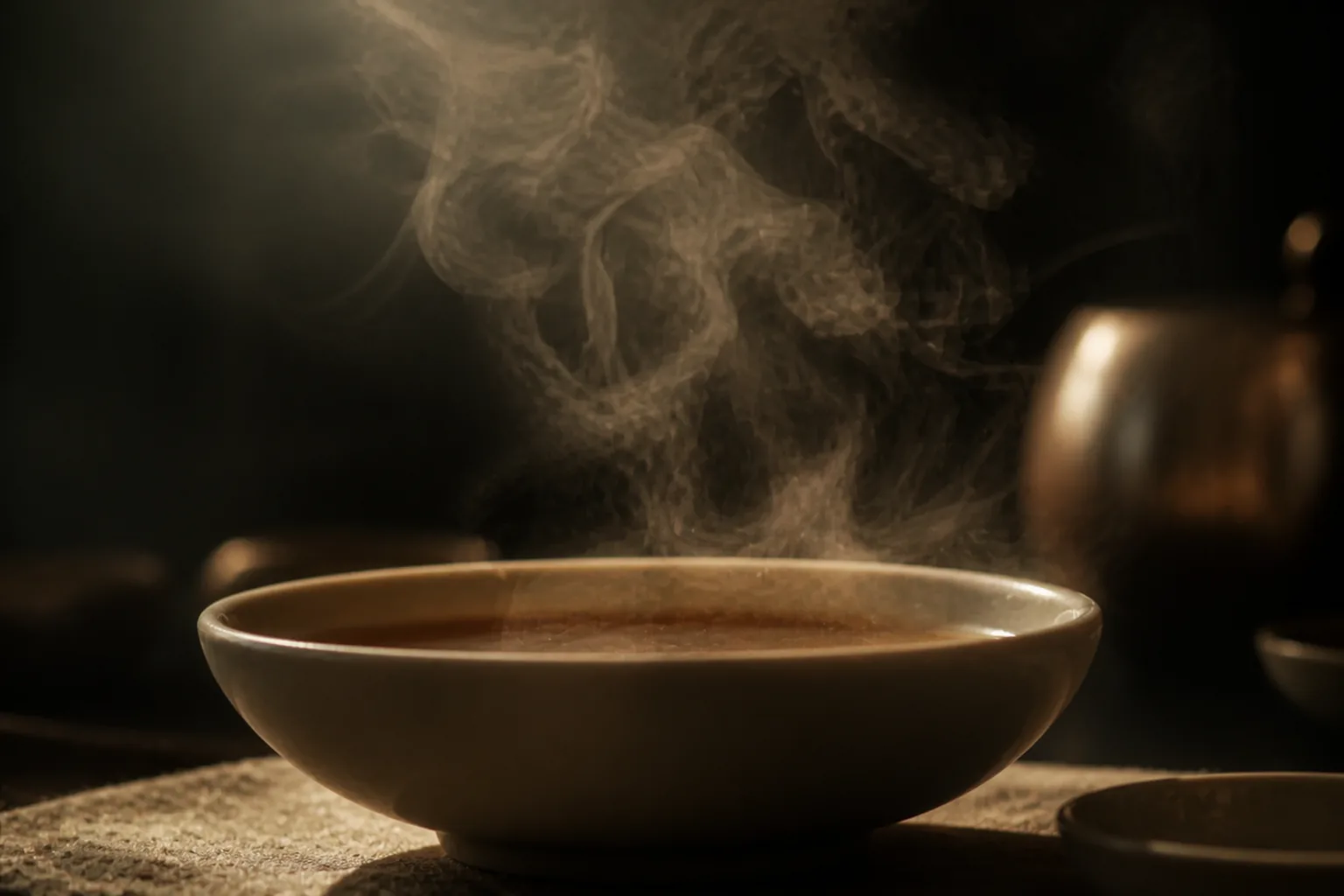
Some foods are seen first; others are smelled first. Hot broth belongs to the second kind. A lid lifts, a bowl moves closer, and the steam begins the meal before anything reaches your lips. Those few seconds pass quickly, yet they are often how a meal stays in memory. Aroma also invites us to slow down: we naturally pause, check the heat and wait until the broth is comfortable to taste. That waiting is the first passage in the story of the bowl.
Notice What Changes on the Palate
Let the steam disperse naturally and keep a little distance from the heat as you notice the whole aroma, then its details. It may suggest the clean sweetness of vegetables, the quiet earthiness of mushrooms, the brightness of dried spices, or simply the comfort of warm vapor. These words give the present sensation a name. If description feels difficult, begin with three pairs: bright or grounded, close or drifting, familiar or new.
Let the Finish Stay for a Moment
As the temperature falls, what you notice may change. The first impression comes with rising steam; a few minutes later, softer notes closer to the surface may be easier to find. Pause once when the broth arrives, once after the first ingredients are cooked, and once near the end of the meal. Does the aroma become more focused, more integrated, or pulled in a new direction by what entered the pot? Instead of rushing to call it strong or light, ask which moment most makes you want another sip, and which brief aroma remains in memory the longest. The same word for an aroma may also move from the foreground to the background as the broth cools, allowing another impression to rise slowly into view.
Bring the Ingredients In
The aromas around the table also rewrite the broth. Fresh vegetables entering the pot, an opened dish of sauce, rain carried in on a coat, and a sentence from the person beside you can all become part of the same memory. To read the broth more clearly, leave the sauces closed for a moment and give the table a short stretch of quiet before comparing the first round. If you came simply to be together, let the analysis fall away. The beauty of hot broth is that it happens in time shared by the people at the table, and knowledge is only one way to move closer to that experience.
Carry the Observation to Another Meal
Next time, give a bowl of broth three breaths: watch the steam when it arrives, choose one word for the aroma before tasting, then compare it again midway through the meal. Keep the impression for yourself or exchange one word with the people beside you; the same curl of steam often settles in a different place in every memory. One person may think of rain while another simply says it feels warm, and a few simple words can bring the table closer. Let the aroma and story of this pot travel with you to the next gathering.
Keep this note as a small idea for your next hotpot. For current dishes, ingredients and in-store practice, please ask the team at your location.