
Table GuidesNOTE 03 · 04 IN THE SERIES
TABLE GUIDES
Build a Complete Bite: Something Tender, Something Crisp, and a Little Broth
Arrange one bite by texture rather than volume: choose a main character, add a contrast, and let the broth connect them.
Reading settings+
Use larger text or higher contrast whenever reading would feel more comfortable.
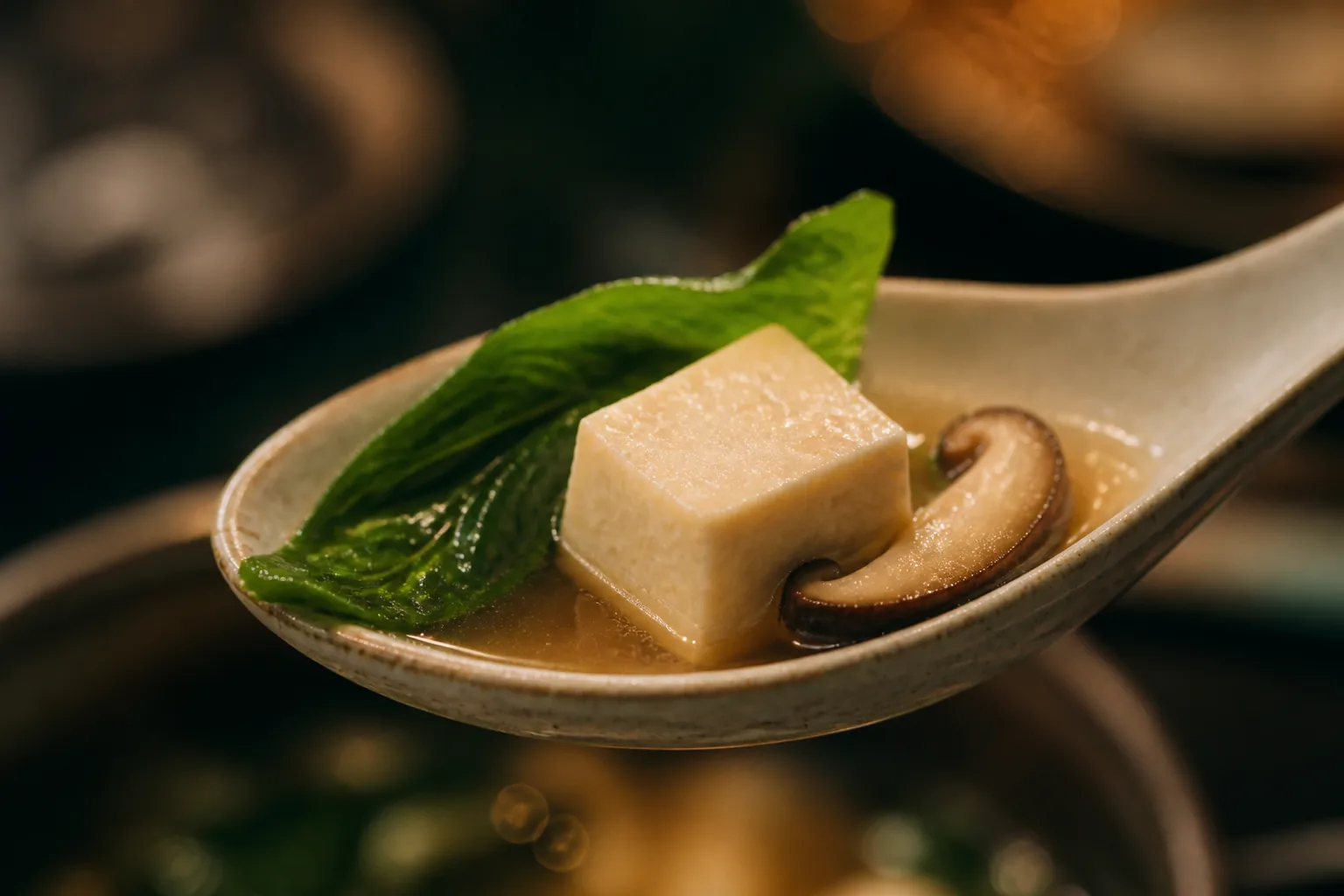
A rich hotpot bite does not have to contain many things at once. Sometimes one tender texture, something crisp and a spoonful of broth are enough to let each element speak. Making the bite smaller can make your preferences easier to recognize, and keeps ingredients from disappearing together before you have noticed them. Once every item has been heated appropriately, begin pairing with small amounts.
Save One Sip for the Broth
Choose one main character. It might be the ingredient you anticipated most or something you are trying for the first time. Is it tender, springy, firm, crisp or broth-soaked? Find a different texture to place beside it: soft with crisp, springy with silky, substantial with something bright. Two elements are enough to create a turn. Place them on opposite sides of the spoon first and notice their thickness and proportion before deciding which deserves more room; the visual balance often hints at which one will arrive first on the palate. If they tend to fall apart, taste each separately and then together. Notice whether they complement each other or whether one moves to the front.
Cook a Little at a Time
Broth is the line that connects the two textures. Bring only a little into the first bite and notice how aroma opens as you chew. Does it appear before the bite, after the ingredient breaks, or as you swallow? Leave a little room in the spoon so broth and ingredients keep their place before reaching your lips. Try meeting the main character first and the contrasting texture second, then reverse the order in the next bite and notice how the impression changes. Adjust the amount of broth after that and see whether the outline of each ingredient becomes clearer. By the middle of the meal, the broth has a new expression; treating it as a fresh condition for pairing lets you read how the meal has traveled.
Let Sauce Follow Your Taste
Leave sauce for the second bite. The first introduces the ingredient and broth. In the second, add the acidity, heat or savoriness you enjoy, then use the third to decide whether to continue. Both versions can be delicious; what matters is knowing why you chose each one. Exchange impressions with the people at the table and hear how the same bite changes for someone else. Keep individual utensils and sauce dishes so everyone can preserve the pairing they enjoy.
Bring the Meal Gently to Rest
End with a three-line note: what was the main character, where did the contrast come from, and what did the broth or sauce do? That is enough to give the next meal a new starting point while dinner remains easy and unhurried. Replace just one element next time and an entirely different texture may appear; bite by bite, these small choices grow into a table preference that belongs to you. For questions about doneness, ingredients or allergens, ask the team at your location first.
Keep this note as a small idea for your next hotpot. For current dishes, ingredients and in-store practice, please ask the team at your location.