Table GuidesNOTE 04 · 04 IN THE SERIES
TABLE GUIDES
Save the Last Bowl for Noodles: A Gentle End to Hotpot
After the broth has traveled through the whole table, a staple is more than something filling—it gathers the flavors of the meal into a quiet ending.
Reading settings+
Use larger text or higher contrast whenever reading would feel more comfortable.
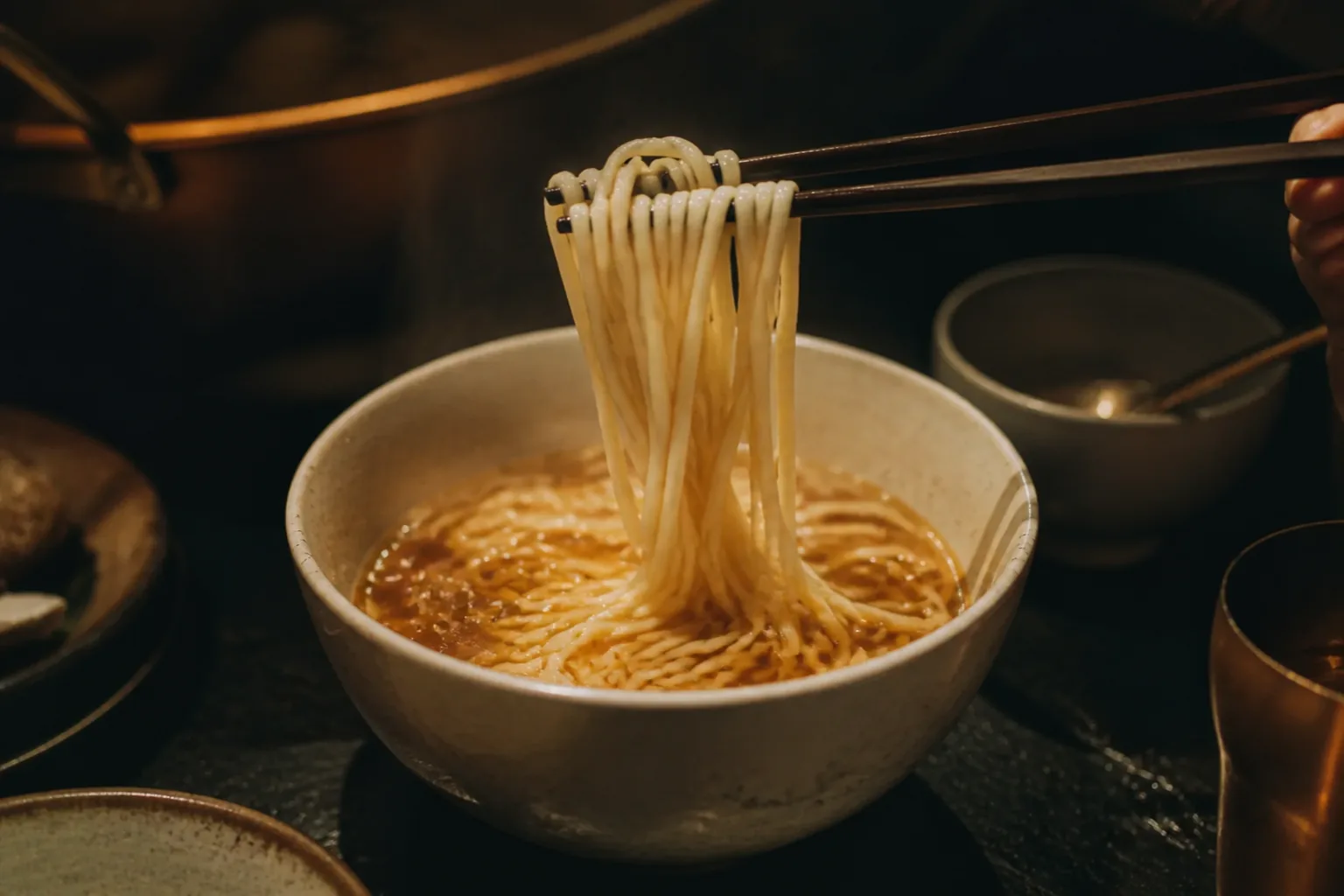
Late in a hotpot meal, the broth has gathered flavors left by vegetables, mushrooms and everything else that passed through it. The clear opening, several rounds of ingredients and the pauses between them have become a table diary that belongs only to this gathering. A staple at this point is like paper that absorbs those memories and holds the meal’s final line. Look at everyone’s appetite and what remains in the pot before deciding whether to continue, and let the ending answer what this table truly needs.
Save One Sip for the Broth
Before adding a staple, clear the surface and make sure no forgotten ingredient or item of uncertain doneness remains. Taste a small spoonful of the broth as it is now. Notice the amount, the perception of saltiness, and any fine pieces in the liquid. Recall the opening sip, too, and consider how far the aroma, intensity and weight on the palate have traveled. If it needs adjustment, ask the team at the restaurant to help. A clear surface also lets the staple gather the broth without becoming tangled in the previous round.
Cook a Little at a Time
Noodles, rice and other staples each have their own ingredients, shape and heating rhythm. Read the product or restaurant guidance to learn whether the item goes directly into the pot, is cooked separately, or is already cooked and needs reheating. Add a small amount, use clean utensils, and check the center and texture at the appropriate time; two small batches are usually easier to adjust than one crowded batch. If you have an allergy, confirm wheat, egg, soy and other ingredient information first.
Let Sauce Follow Your Taste
Wait for a moment after serving. The last bowl is often the hottest, and the one most easily rushed because the meal is ending. Let some steam disperse, notice how noodles or grains carry the broth, and begin with a small bite. If the texture continues to change, move what remains to a wider bowl. You can also serve a small portion to the people beside you and exchange what each person finds most changed at the end of the pot. Let the table finish at an easy pace; stopping where you feel comfortable is a complete ending.
Bring the Meal Gently to Rest
When you remember the final bowl, keep two questions: how was the broth different from the opening, and did the staple make that difference clearer or gentler? Let the answers close the meal. As the final steam fades, the pace of the table softens with it. One person remembers the broth’s transformation; another remembers the warmth of a bowl passed into their hands. This bowl is both a staple and the period that gathers everyone around the table again. What remains in memory may be less about how abundant the noodles were and more about everyone slowing down long enough to finish the last few sentences together.
Keep this note as a small idea for your next hotpot. For current dishes, ingredients and in-store practice, please ask the team at your location.