
Ingredient GuideNOTE 03 · 03 IN THE SERIES
INGREDIENT FIELD
The Final Lift of Aroma: How Spices and Herbs Finish a Bowl of Broth
Some flavors welcome a long simmer; others need only meet the steam at the end. Notice how timing gives aroma a different expression.
Reading settings+
Use larger text or higher contrast whenever reading would feel more comfortable.
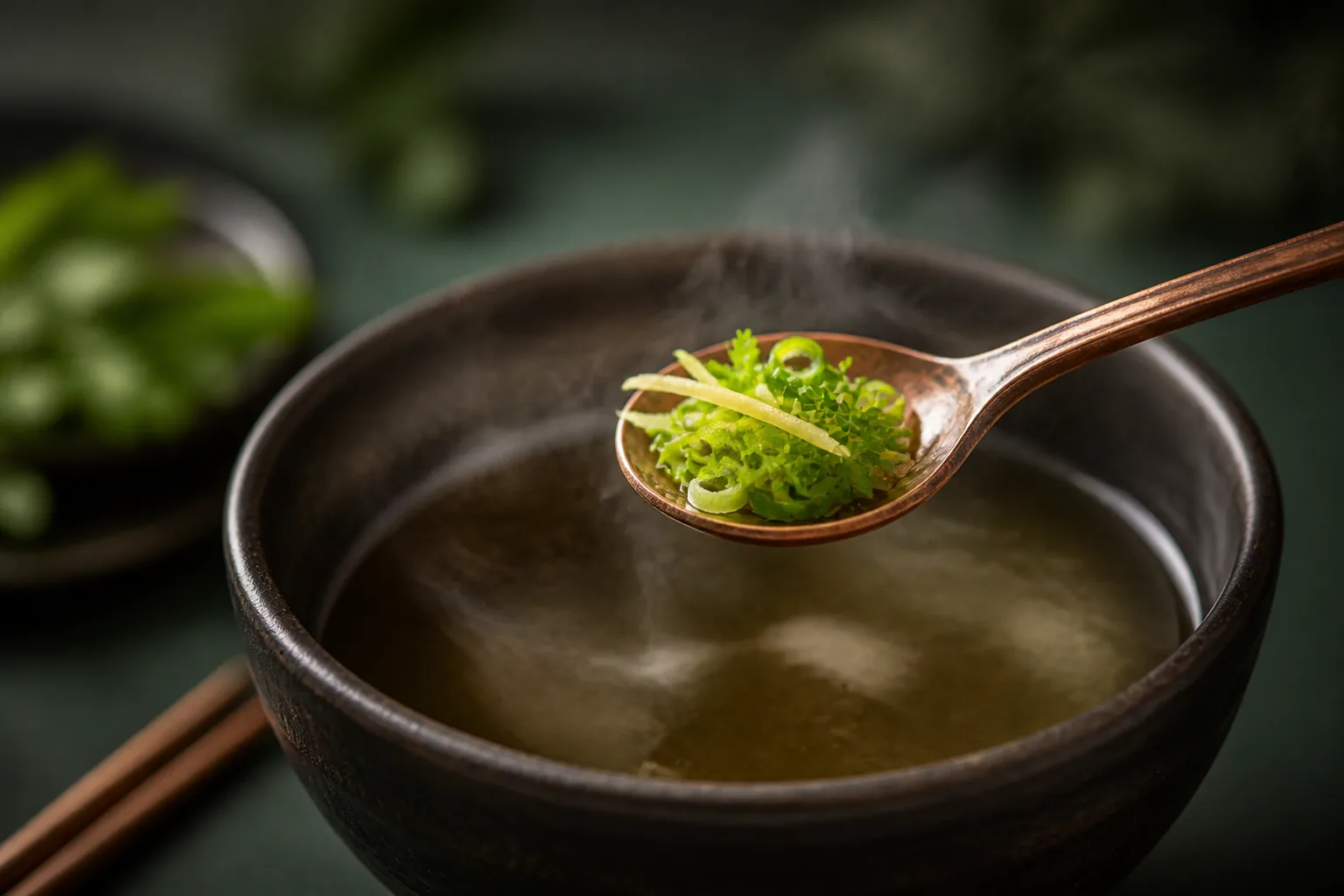
As a bowl of broth nears completion, spices or herbs added at the end are often there not to add volume, but to open a small window in the aroma. When steam meets a freshly cut surface, bright, green, fresh or gently pungent notes rise first and send a familiar broth in a new direction. The change may last only a few minutes, which makes it worth smelling before tasting rather than searching for it after everything has been stirred together. If you normally describe an aroma only as “fragrant,” ask whether it feels lively, grounded or sharp near the nose. A more precise memory makes the next choice easier. Bring an individual bowl closer and you can notice how aroma travels from the surface of the pot into your own serving.
Thickness Changes Texture
Timing changes the experience. Added earlier, an aromatic may gradually become part of the whole, while its shape and texture change with heat. Added close to serving, it may keep a clearer presence. You can let it become a background or save it as the final sentence. When the ingredient is suitable, divide a small amount in two: place half in the pot earlier and save half for the bowl, then compare where the aroma appears and how long it remains. The earlier addition may round out the whole pot, while the later one brings light back to the surface.
Read from Edge to Center
Cut and quantity matter as well. Finely cut aromatics spread through more bites and may merge with the broth more quickly. Larger pieces may release a concentrated note only when bitten. Begin with a small amount, taste the plain broth, then decide whether to add more so every ingredient keeps its own voice. You can also place aromatics in individual bowls rather than the shared pot, preserving choice for everyone. Compare two bowls side by side—one with the plain broth and one with the finishing aroma—and the difference is often easier to feel than when everything is added at once.
Find the Right Tenderness and Aroma
For fresh herbs or other produce, wash your hands, rinse under running water without soap or commercial produce wash, and keep them separate from raw animal products; for sauces, dried spices and blended seasonings, check the ingredient and allergen labels first.
Leave a Little Patience for the Next Bite
At the end, ask only three questions. Where did the aroma appear first? Did it make the broth clearer, or did it become the main character? Do I want to keep it in the next sip? Notice, too, whether the aroma or the broth leaves first, and which note remains after the spoon is set down. If people at the table chose different moments to add it, exchange impressions and see how one pot found several endings. Carry the answers to another meal, and the aroma gains a life beyond this bowl.
References for this note+
For readers who would like to go further, these are the public references behind the general guidance. Menu items and in-store practice may change with current conditions.