
Ingredient GuideNOTE 02 · 03 IN THE SERIES
INGREDIENT FIELD
Give Root Vegetables a Little Patience Once They Enter the Pot
Follow the cut, thickness and heating time as root vegetables move from firm edges toward a tender center.
Reading settings+
Use larger text or higher contrast whenever reading would feel more comfortable.
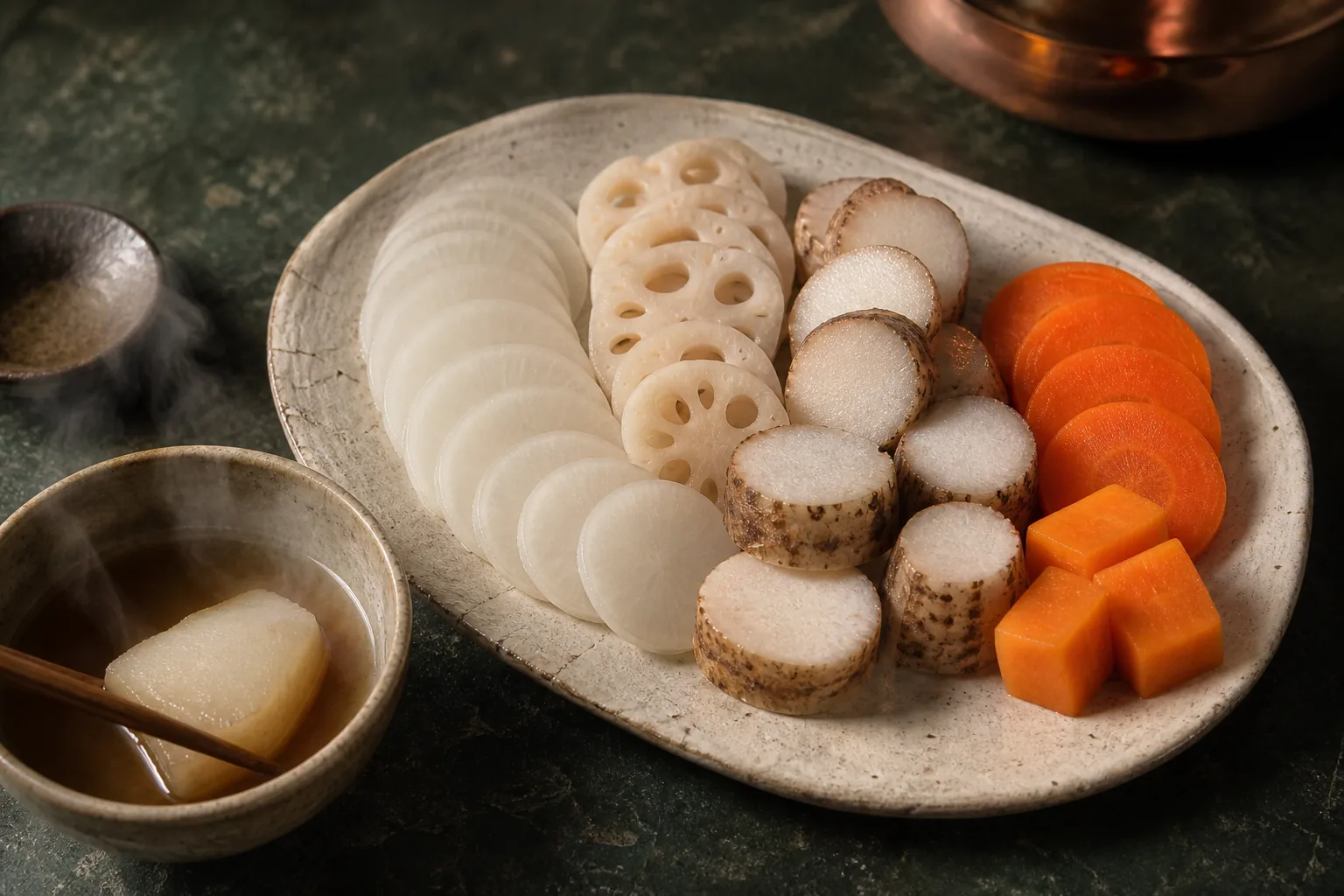
Root vegetables do not hurry to show what they can become. When they first enter the pot, their edges may still be distinct and their texture firm. As heat travels toward the center, the cut surface softens and a spoon passes through more easily. Waiting is part of the ingredient. Compared with quick-cooking leafy greens, roots remind us not to judge everything by how lively the surface looks. Each piece in the pot moves at its own pace. Add thicker roots earlier and in small batches, then let other ingredients join over time, and the meal naturally develops a beginning, a middle and an end. The waiting also opens a quiet space at the table in which the sweetness rising through the broth becomes easier to notice.
Thickness Changes Texture
Thickness changes the rhythm of a bite. A thin slice generally heats sooner and lets you notice how broth meets its edges. A thicker piece keeps a more distinct center, sometimes offering different textures from outside to inside. Variety, size, starting temperature and conditions in the pot shape the waiting time together. Take out a small piece at an appropriate moment and check the center and texture; when you are unsure, ask the team at the restaurant to help.
Read from Edge to Center
When tasting, begin at the edge and then notice the center. Has the edge started to carry the broth? Is the center still crisp, firm, creamy, or fully tender? As you chew, observe whether its natural sweetness runs beside the broth, blends into it, or comes to the front. These words help you find where you prefer the ingredient to stop. If people at the table like different textures, divide it into smaller pieces and lift them in two rounds so everyone can meet the texture they enjoy. Place the results together and you can watch one ingredient travel from a distinct center toward tenderness. The first piece may preserve the outline of the cut, while the second lets broth and sweetness move closer; both can be delicious while telling different stories.
Find the Right Tenderness and Aroma
When preparing fresh roots at home, wash your hands, rinse the produce under running water without soap or commercial produce wash, and keep it and its utensils separate from raw meat, poultry and seafood; follow the product information for peels and edible parts.
Leave a Little Patience for the Next Bite
Next time root vegetables are on the table, compare two pieces. Lift one when you think it is ready, leave the other a little longer, then notice the edge, center and the amount of broth each carries. Tell the people beside you which texture you preferred, and the next round gains a small clue for caring for one another. In the difference between the two pieces, you will begin to recognize the ingredient’s own unhurried pace.
References for this note+
For readers who would like to go further, these are the public references behind the general guidance. Menu items and in-store practice may change with current conditions.